

Oh! We know how it feels to build something from scratch or try to develop something small into something big.
You have set up a brilliant tech company. But here’s the thing — to make it soar, you must create space for innovation, efficiency, and growth to hit your goals.
Wondering how to make all of these happen?
You’re in the right place. We’ve helped you gather insights from experts.
After reading this blog, choosing the right structure for your organisation will become easy.
You’ll get equipped with experts’ insights to optimise your tech company’s organisational structure.
Let’s kick things off by addressing some common challenges.
What are the common challenges tech companies face when structuring their teams?

Structuring your team is like buying a new car.
You would conduct thorough market research before picking the best vehicle. The same approach applies to your organisational structure.
Both approaches hinge on one common factor – a comprehensive understanding.
Like any other company, your priority lies in creating a road-worthy structure. A structure that can help you take your company towards success.
Here are four challenges your tech company can face when structuring your teams:
- Your human resources might lack digital knowledge and skills.
- You might struggle to keep top-rated talent and experts.
- A lack of advanced technology and decentralised decision-making can challenge your team.
- Cybersecurity is one of the most important challenges to overcome.
Most big tech companies face these four common challenges.
But, when forming a startup team, you encounter different organisational challenges.
What are the common challenges startups face with structuring their team?

Building a tech startup team is challenging but worth your time and effort.
Four pitfalls you must know as an owner or manager of a tech startup:
- Undefined or unrealistic expectations in your startup can create challenges in maintaining sustainability.
- You can define your startup’s culture by hiring candidates with the same passion. But, finding such candidates is a challenge.
- A partnership is necessary for your startup’s success. But finding one is tricky.
- A slow development process in your startup can complicate product development.
You can tackle these challenges with a seamless tech company organisational structure.
Experts provide valuable insights into constructing the best organisational structure for tech companies.
Let’s first explore the ideal organisational structures for tech companies.
Which is the best organisational structure for tech companies?
Experts recommend three organisational structures that you can use in your tech company.
1. Chain of command
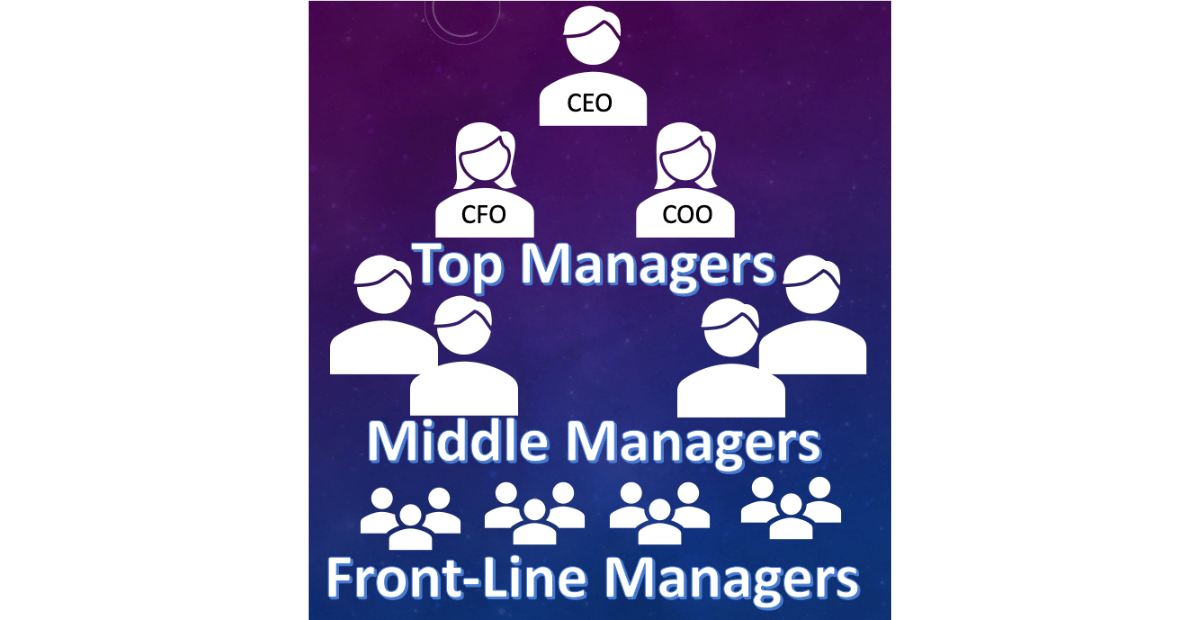
According to Peter Brodie, Director of Organisation Design at The Orgworks, leaders can sense when their organisation’s functions aren’t working well.
Peter advises reassessing strategy and structure if the operational environment changes.
All these are aspects of a well-functioning chain of command.
But what exactly is a chain of command?
This organisational structure enables you to establish and document clear reporting methods. The chain of command sets clear authority, ranks, and responsibilities in your company.
The chain of command indicates who reports to whom. And who has the decision-making power at each level.
It also helps improve work by delegating and approving work on time.
Most organisations construct a chain of command from high to low ranks.
In tech companies, the lowest rank employee is an intern, and the highest is the manager.
So, when establishing the chain of command, begin with managers and progress to interns.
Pros
These are the pros of the chain of command structure:
- Communication becomes smooth and easy with proper hierarchy in your tech organisation.
- It allows your employees to resolve hiccups in projects faster.
- A chain of commands helps you reduce confusion.
Cons
These are the cons of the chain of command structure:
- It may lower the chance of collaboration between your employees.
- The chain of command takes time to approve or address any concern/idea.
2. Decentralisation
Peter Brodie says, “Redesigning your tech company is a huge responsibility. You need experience and expertise to get it right.”
Peter suggests identifying knowledge and competence principles. Peter adds that once recognised, hierarchical levels and a decentralisation plan were set up.
Decentralisation distributes decision-making authority and responsibilities across various organisational levels and units.
You transfer the authority of decision-making from an individual to a distributed network.
A decentralisation structure helps end biases within a team. You give control to a group of experts instead of one individual.
Amazon, for example, follows decentralisation to an extreme. From employee experience to product development, Amazon headquarters controls everything.
Adopting decentralisation in your tech organisation allows your employees to make decisions. You make them self-sufficient – an advanced yet efficient way to structure your team.
Having a decentralisation structure allows your line managers to resolve issues. You can always start by training your managers and making them train your team.
It also enhances confidence and certainty among employees.
Pros
Pros of decentralisation include:
- You’ll have experts at every level of your hierarchy.
- Your line managers can make swift decisions without top management’s approval.
- Top management can focus on long-term strategies and plans.
Cons
Cons of decentralisation include:
- You may face duplication of your computer support or administrative services.
- Not every manager or employee has the same evaluation method.
3. Departmentalisation
Peter suggests matching your employees’ behaviour, experience, and skills with respective departments.
“You can plan business strategy with a departmentalisation structure,” Peter says.
Departmentalisation structures your tech company employees into groups based on their work.
Different people lead these departments and work together to complete projects.
When projects are big or hard, people from different departments work together to meet client’s requirements on time.
For example, Apple has large manufacturing, marketing, accounting, finance, and shipping separations.
In tech companies, you can use the primary form of departmentalisation.
Start from functions, products, markets, and customers. Or you can combine them all and create a secondary form of departmentalisation.
Pros
Pros of departmentalisation include:
- Departmentalisation offers a logical image of your different teams’ functions.
- This makes functions and operations in every department easy.
- Simplifies development, learning, training, and supervision of teams.
Cons
Cons of departmentalisation include:
- Decision-making becomes slower due to several levels of management.
- Monitoring of employee’s performance, productivity, and accountability becomes challenging.
All the above structures are unique in their way. Any of these organisational structures will do wonders for your tech company.
But, experts recommend another organisational structure if you run a tech startup.
Which is the best organisational structure for startup companies?
As a startup owner, you often keep your working structure simple at the start. Simple is good when you have few employees. It’s stress-free.
Your startup has an owner, CEO, manager, and employees.
Here’s an organisational structure option for your tech startup.
Flat organisational structure
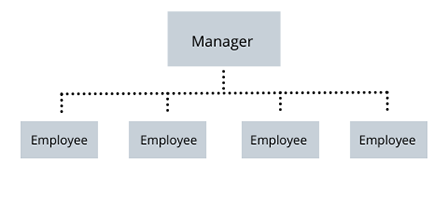
Dylan Taylor, Chairman & CEO of Voyager Space Holdings, says, “You can start your startup working process with a flat organisational structure. In this, your experts are the decision makers.”
A flat organisational structure has few levels of management containing only leaders and employees.
If you want, you can also have no middle management.
Google, Hubspot, and Amazon are examples of tech companies that use flat organisational structures.
These tech companies use a flat organisational structure to empower their employees.
All these companies operate fast. So, to cope, they need quick adaptation among their employees.
With a flat organisational structure, you can expand faster than your competitors with complex systems.
This structure also helps you address and resolve work issues.
Pros
Pros of the flat organisational structure include:
- There are no complex layers of management.
- Better communication and coordination between employees.
- You can make decisions faster and pursue your tasks.
Cons
Cons of the flat organisational structure include:
- Employees can confuse themselves with supervision and authority.
- You can experience less room for growth.
Having an organisational structure ensures solid communication. But there’s still room for improvement.
Equip your employees, from managers and low-ranking staff, with a communication tool.
Why?
Your organisational structure cannot succeed with glitches in your team communication.
So what’s the solution?
Use the best communication app like Talk Magnet for your tech company or startup.
You can read our article on the best team communication app for enterprises to pick one that suits your needs.
If you run a small tech startup, our article on the best team communication app for SMEs can help you.
Ready to get the best organisational structure for your company?
Like employees’ performance, crafting the best organisational structure is your top priority.
A blend of seamless communication and an organisational structure will lead to your team’s success.
Now you know the organisational structure that best suits your team. Which communication tool will serve your organisation better?
Talk Magnet is that tool. It offers instant 1:1 messages, video & audio calls, and screen-sharing options for seamless communication.
So what are you waiting for?
Schedule a free demo today or sign up for free now on Talk Magnet to leverage more features.